Nazaré makes record waves for a reason that has nothing to do with luck. A submarine canyon nearly as deep as the Grand Canyon runs straight in toward the shore here, funnelling and amplifying Atlantic swell until it stands up into walls of water that have topped thirty metres. The giants arrive in winter, when the storms line up off the coast; the rest of the year the sea just breathes heavily against the sand.
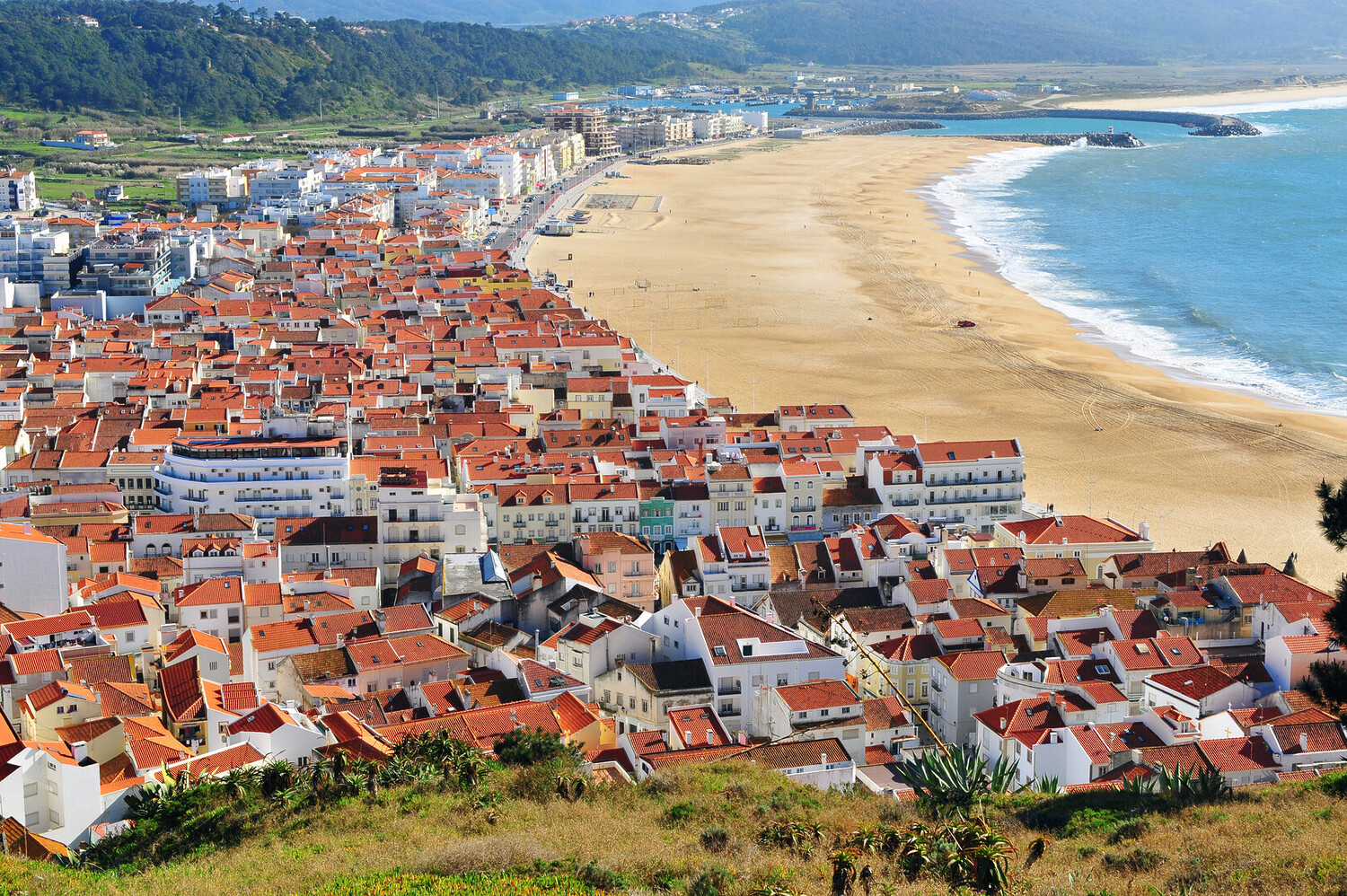
The town splits in two. Down at sea level is the old fishing quarter, a grid of streets behind a broad beach where women in seven skirts once waited for the boats and where racks of fish still dry stiff in the salt wind. Up on the Sítio, the clifftop above, sits the older village around its church, reached by a funicular that has been hauling people up the rock face since the 1890s.
Ride the funicular up and walk out to the lighthouse fort on the point. This squat little fortress is now a surf museum, and its terrace is the classic spot to watch the big-wave crews get towed into the monsters below. Even on a calm day the view is worth the climb — the whole curve of the bay on one side, the raw break of Praia do Norte on the other.
Praia do Norte is where the records happen, and it is emphatically not a swimming beach. The water is a churn of current and cold, and the wind off it can lean on you hard enough to make walking a negotiation. Come to watch, not to wade. Photographers line the clifftop with long lenses through the winter, waiting for a single wave and a single rider to line up in the same frame.
Back down in town, the fishing culture is still the meal ticket. Eat grilled fish at a place near the front, buy a paper cone of the dried and salted kind if you are brave, and let the Atlantic wind push you along the promenade. Park up top by the fort or down by the beach — the funicular joins the two.